United Kingdom
The first CIPP sewer installation took place in London. That puts the technology’s European origins more than five decades ago.
EPA technology history ↗
Straight answers · Sewer lining since 2005
Built for long service. Backed by experience. Explained without a 50-year promise.
Start with our experience ↓The honest answer
Cured-in-place pipe lining, or CIPP, is commonly designed around a 50-year service life. That is an engineering expectation under the design assumptions for a particular system and application. It is not proof that every liner will last 50 years in every home.
With a suitable system, proper installation, and normal sanitary sewer use within the manufacturer’s limits, we expect a long-lasting repair. We do not promise a specific 50-year lifespan. Your project’s written warranty states the coverage and duration that apply.
Our own track record
We have been installing sewer pipe liners under homes in Fort Myers, Cape Coral, Naples, and surrounding Southwest Florida communities since 2005. Liners from our early work remain in the ground and in service today, according to our company’s experience.
That local history matters to us. It is the experience we can speak to personally. It does not mean every early installation has been re-inspected, or that today’s materials and curing methods are identical to those used in 2005.
We want your confidence to come from the condition of the pipe, the quality of the work, and evidence over time.
Real work. Years later.
Take a look at this liner in our field video.
A longer international history
Pipe lining has a substantial international history. These milestones document adoption of the technology; they do not establish that every installation from those dates remains in service.
The first CIPP sewer installation took place in London. That puts the technology’s European origins more than five decades ago.
EPA technology history ↗Aarsleff reports individual Finnish sewer lining projects in the 1980s and its own Finnish operations beginning in 1993. This is sewer-network history, not a claim about every home.
Aarsleff’s Finnish history ↗Sacpro’s history records its predecessor introducing CIPP lining in buildings in 1990—more than three decades of building applications.
Sacpro’s company history ↗That experience, together with our own work, gives us reason to expect durable results here when the system suits the pipe and is installed correctly. It does not guarantee the same lifespan: materials, workmanship, wastewater, and site conditions differ.
What the research actually says
An EPA-funded pilot study examined municipal sewer liners with 5, 21, 23, and 25 years of service and found the sampled liners in excellent condition. The researchers considered the results consistent with an intended 50-year life, while calling for a broader evidence base. A limited municipal study cannot prove the lifespan of every residential liner or a different resin and curing system.
It would also be inaccurate to say CIPP has not been around in the United States that long. EPA records its U.S. introduction in 1976. The age of the technology is different from verified service-life evidence for the specific product and installation in your home.
Read the EPA-funded retrospective study ↗ · Read the U.S. technology history ↗
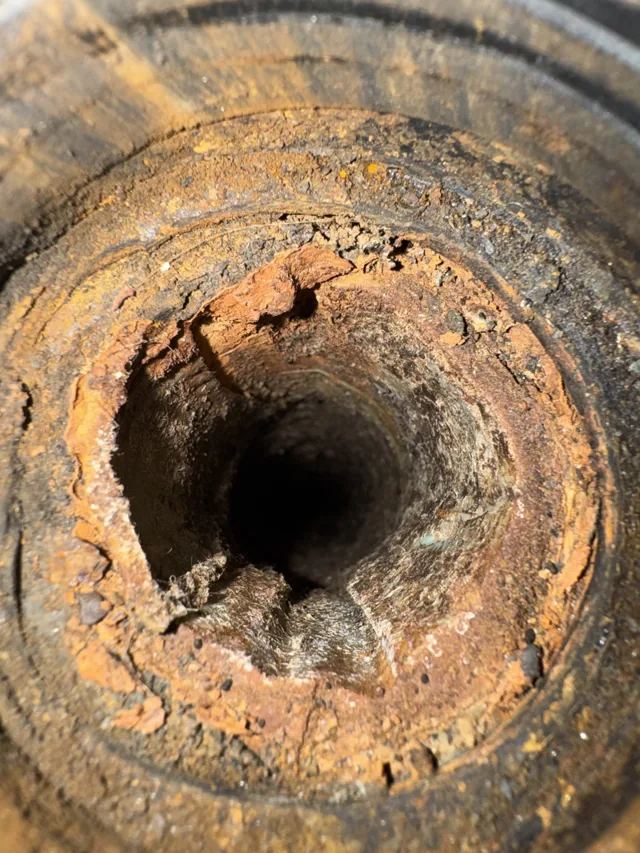
A lesson from cast iron
Cast iron earned a reputation for durability. Yet we see deteriorated cast-iron drains under Southwest Florida homes. No pipe material is immune to its surroundings or what flows through it.
The Cast Iron Soil Pipe Institute identifies aggressive acidic waste and certain corrosive soils as possible causes of deterioration. That does not mean every Florida property has those conditions. An inspection tells us what is happening in your line.
That is why we take the same honest approach with lining: evaluate the pipe, choose an appropriate repair, and explain the limits.
Cast Iron Soil Pipe Institute handbook ↗What matters on your job
Only the coverage and term stated in your project’s written warranty. This page does not offer a 50-year warranty, lifetime warranty, or guaranteed service life. Ask us to explain your project’s terms before work begins.
Tell us what is happening. We will help you understand whether cleaning, lining, a targeted repair, or replacement is appropriate.
Tell us about the problemCall 239-332-2750History and research reviewed November 2026. The 2005 installation history and ongoing local service experience are provided by The Plumber’s Plumber. International adoption dates and the research above are not warranties or endorsements of our work.
Explore customer feedback about our service, inspections, and pipe rehabilitation.